Cordless vs 12V tire inflator
A cordless inflator like the Fanttik X10 Pro ($53.99, 150 PSI) runs off its own rechargeable battery so you can use it away from the car, while a 12V plug-in model like the VIAIR EVC88P ($122.78, 120 PSI) draws power straight from the car's electrical system for effectively unlimited runtime as long as the engine is running.
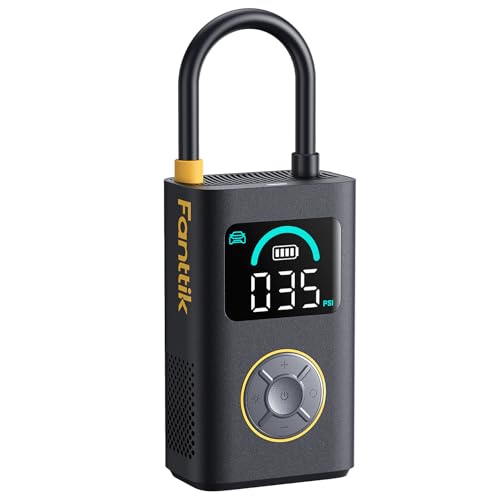
Fanttik X10 Pro 35s Fast Tire Inflator, 150PSI Cordless Air Pump, Auto-Off
150 PSI / cordless
Portability away from the car and quick top-offs without starting the engine
Verdict: Choose cordless if you want an inflator for bikes, sports equipment, or a car parked far from an outlet, and you are comfortable recharging a battery between uses. Choose a 12V plug-in model if you want higher sustained output for larger tires, do not want to think about battery charge level, and always have it in the car anyway.
The two sides
- Cordless tire inflatorFanttik X10 Pro 35s Fast Tire Inflator, 150PSI Cordless Air Pump, Auto-Off150 PSI / cordless$53.99Check price on Amazon
 12V plug-in tire inflatorVIAIR EVC88P Digital 12V Tire Inflator, 120 PSI with Auto Shut Off for Cars120 PSI$122.78Check price on Amazon
Cordless tire inflator
Best for: Portability away from the car and quick top-offs without starting the engine
- Works anywhere, no need to start the car or find an outlet
- Rated 150 PSI with auto-off, useful for bike tires, balls, and inflatables in addition to car tires
- Fast fill time on a single charge for typical passenger tire top-offs
Drawbacks: Battery capacity is finite, so a fully depleted tire or multiple tires in a row can drain it mid-job Needs to be recharged periodically even if it sits unused in the trunk
12V plug-in tire inflator
Best for: Consistent power for bigger tires and repeated use without worrying about charge level
- Draws power directly from the car, no battery to charge or degrade over time
- Digital gauge and auto shutoff at 120 PSI make it easy to hit an exact target pressure
- Effectively unlimited runtime as long as the engine is running and the outlet supplies power
Drawbacks: Requires the engine running for reliable voltage on most vehicles, and drains the battery faster if used with the engine off Cord length limits how far from the car you can inflate
| Cordless | 12V plug-in | |
|---|---|---|
| Price range in this catalog | $23.49 to $199.00 | $52.99 to $346.79 |
| Power source | Rechargeable internal battery | Car's 12V outlet or battery |
| Typical PSI rating | up to 150 to 160 PSI | up to 120 to 150 PSI, higher on heavy-duty models |
| Runtime limit | Limited by battery charge | Limited only by the car running and cord reach |
| Usable away from the car | Yes | Only within cord length of the outlet |
| Best for | Bikes, sports gear, quick top-offs anywhere | Full tire fills, repeated use, bigger tires |
| Example model | Fanttik X10 Pro, $53.99 | VIAIR EVC88P, $122.78 |
What is the real tradeoff between cordless and 12V inflators?
The core tradeoff is portability versus unlimited runtime. A cordless inflator like the Fanttik X10 Pro carries its own rechargeable battery, so it works anywhere: at a trailhead filling bike tires, on a sports field for a flat basketball, or on a car parked away from any outlet. A 12V plug-in model like the VIAIR EVC88P has no battery to run down, since it pulls power directly from the car for as long as the engine runs, which makes it better suited to fully airing up a low or flat tire without worrying about running out of charge partway through.
Neither is strictly better, they solve slightly different problems. If you mainly top off tire pressure once a season, a cordless model's convenience wins. If you regularly air up bigger tires, run an off-road setup that airs down for trails and back up for pavement, or want a compressor that never needs its own charge cycle, the 12V plug-in style holds the edge.
Which one fills a tire faster?
Fill time depends more on CFM (cubic feet per minute) output and starting pressure than on power source alone, so compare each model's stated numbers rather than assuming cordless or corded wins by default. The Fanttik X10 Pro is built for speed on passenger tires, rated for a fast fill in well under a minute for a typical top-off. Heavier-duty 12V units, including several VIAIR and VEVOR models in this catalog rated with a specific CFM figure, are built for repeated or larger-volume fills, such as airing up truck or SUV tires or refilling several tires back to back after an off-road trip.
Which is more dependable for a roadside emergency?
For a genuine flat-tire emergency, a 12V plug-in inflator has one advantage that matters most: it cannot show up with a dead battery, since it draws power the moment you plug it in and start the engine. A cordless inflator is just as capable in the moment, but only if it was charged before you needed it, which means it requires a habit of topping off its battery periodically even when it has not been used.
If you keep an inflator in the car specifically for emergencies rather than routine use, a 12V plug-in model removes one point of failure. If you already carry it for other uses, like bikes or sports equipment, and you are disciplined about recharging it, a cordless model covers both jobs at once.
- Cordless: check the battery indicator before a trip, recharge every few weeks even if unused
- 12V plug-in: keep it in the car, no battery maintenance required
Do cordless inflators lose power as the battery drains?
Most cordless inflators maintain fairly consistent output until the battery is nearly depleted, at which point fill speed and maximum pressure both drop off. This is why a cordless inflator that struggled to reach your target PSI on a previous use is often a battery-charge problem rather than a hardware problem. A 12V plug-in model does not have this failure mode, since its output is tied to the car's electrical system rather than a depleting internal cell.
More options on both sides
Prices change often.


Frequently asked questions
Can a cordless tire inflator fully air up a completely flat tire?
Most cordless inflators can, though it uses more of the battery's charge than a routine top-off and takes longer than filling a tire that only needs a few PSI added. If you expect to need a full fill from flat rather than a maintenance top-off, check the specific model's rated charge cycles or consider a 12V plug-in model for that use case, since it has no battery capacity to run short.
Does a 12V tire inflator drain my car battery if the engine is off?
It can, especially on a longer fill, since the inflator draws current from the same battery used to start the engine. Running the engine while using a 12V plug-in inflator avoids this entirely, since the alternator supplies the power instead of the battery alone. If you must inflate with the engine off, keep the session short and check your battery's charge afterward.
How often should I recharge a cordless tire inflator?
Even if you have not used it, lithium batteries in cordless tools slowly self-discharge over weeks, so a general habit of topping it off every four to six weeks keeps it ready for an unplanned flat. Check the specific model's manual for its recommended storage charge level, since leaving a lithium battery fully depleted for long stretches can shorten its lifespan.
Which type is better for truck or SUV tires?
Larger tires generally favor a 12V plug-in inflator with a higher CFM rating, since bigger tire volumes take longer to fill and benefit from an inflator that will not run down mid-job. Several heavy-duty 12V models in this catalog specifically list higher CFM figures aimed at truck and SUV use, which is worth checking if your vehicle runs larger tires than a standard sedan.
Is a cordless inflator worth it if I only use it for car tires?
It depends on how often you need to inflate away from the car itself, such as a spare that came off the vehicle, a trailer tire, or a bike rack tire. If every use happens at the car, a 12V plug-in model with no battery to maintain is generally the simpler, more dependable choice for that single use case.