Best car battery chargers
The NOCO GENIUS10 is a 10-amp smart charger that also functions as a maintainer, works on 6V and 12V batteries, and costs $94.95, making it a widely recommended all-around pick for a single vehicle.

NOCO GENIUS10 10A 6/12V Smart Battery Charger, Trickle Charger & Maintainer
10A
The NOCO GENIUS10 delivers 10 amps of charging current, supports both 6V and 12V batteries, and doubles as a maintainer once the battery is full, all for $94.95. That combination of charge speed and set-and-forget maintenance covers most car, truck, and powersports batteries without needing a second device.
The three tiers
Beginner: Best cheap smart charger
Who it is for: Drivers who want an automatic charger and maintainer for one vehicle at the lowest reasonable price.
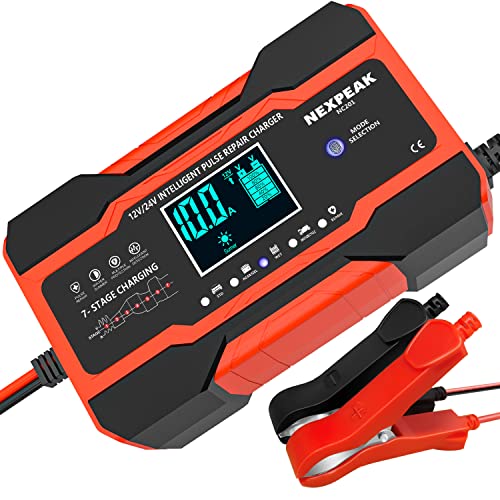
The NEXPEAK 10Amp Battery Charger is a smart trickle charger and maintainer supporting both 12V and 24V for $25.99, undercutting most name-brand chargers while still automating the charge cycle instead of requiring manual monitoring.
Not for: Buyers who want a recognized brand's longer track record, or who need extreme-temperature performance, should look at a step-up option.
Intermediate: Best balance of speed and reliability
Who it is for: Drivers who want a faster charge than a basic trickle unit without paying premium prices.
 Intermediate pickSchumacher Electric 6A Car Battery Charger & Maintainer, 12V, SC13616A$77.49Check price on Amazon
The Schumacher Electric 6A charger and maintainer runs on 12V for $77.49 from a brand with a long history in the charger category, delivering a middle-ground charge rate that is faster than 1-2 amp trickle units but still gentle enough for routine maintenance charging.
Not for: If you need extreme-climate performance or lithium battery compatibility, step up to the CTEK tier below.
Expert: Best for extreme climates
Who it is for: Owners in very hot or very cold climates who want a charger engineered for those conditions.
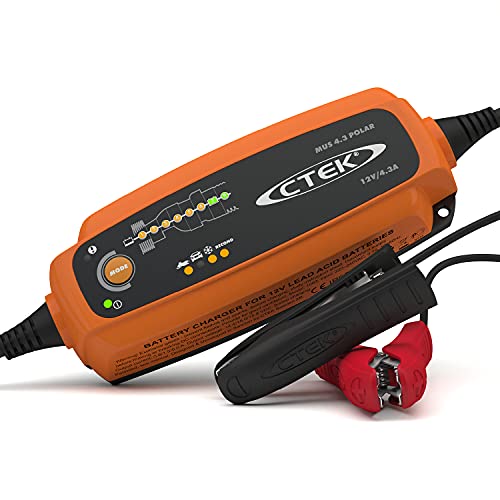
The CTEK 56-958 MUS 4.3 Polar is a fully automatic 8-step charger built specifically for extreme climate use, for $169.78. CTEK's multi-step charging profile is designed to adjust for temperature extremes that can otherwise reduce a basic charger's effectiveness or a battery's charge acceptance.
Not for: For a garage-kept car in a mild climate, this level of climate engineering is unnecessary; the Schumacher or NEXPEAK options above cover that job for less.
| Model | Price | Key spec | Best for |
|---|---|---|---|
| NEXPEAK 10Amp | $25.99 | 12V/24V, smart maintainer | Cheapest smart charger |
| YDBAO 10A | $27.09 | 12V, automatic smart charger | Budget alternative |
| Schumacher 6A SC1361 | $77.49 | 12V, charger and maintainer | Mid-tier name brand |
| CTEK CT5 | $82.99 | 12V, lithium compatible | Modern battery chemistries |
| NOCO GENIUS10 | $94.95 | 10A, 6V/12V, charger and maintainer | Overall value pick |
| Schumacher Wheeled 6A SC1364 | $126.99 | 6A, wheeled cart design | Garage or shop use |
| CTEK MUS 4.3 Polar | $169.78 | 8-step, extreme climate rated | Very hot or cold climates |
What amperage charger do I need for my car battery?
As a rough rule, charge time in hours is roughly the amp-hours you need to replace, multiplied by 1.2, divided by the charger's amperage. A typical car battery holds somewhere around 45 to 60 amp-hours, so a 10-amp charger like the NOCO GENIUS10 can bring a significantly discharged battery back in several hours, while a 1 to 2 amp trickle charger is meant for gradual maintenance rather than a fast recharge.
Use the battery charge time calculator with your battery's amp-hour rating and a candidate charger's amperage to estimate real charge time before you buy.
Do I need a charger that supports 6V or 24V, or just 12V?
Nearly all modern passenger cars, trucks, and SUVs run 12V systems, so a 12V-only charger covers the large majority of buyers. Classic cars sometimes run 6V systems, and some commercial trucks or equipment run 24V, both of which need a charger explicitly stated to support that voltage, like the NEXPEAK above which lists 12V/24V, or the NOCO GENIUS10 which lists 6V/12V.
Check your vehicle's actual system voltage rather than assuming 12V if you own an older or commercial vehicle.
What is the difference between a charger and a jump starter?
A charger restores a battery's full charge over a period of hours by feeding it current slowly and, in smart units, adjusting the charge profile as the battery fills. A jump starter delivers a short high-current burst meant to start an engine immediately, without fully recharging the battery.
If your battery is simply dead but otherwise healthy, a jump starter gets you moving right away, but the battery still needs a proper charge afterward to avoid repeat failures. See our jump starter versus battery charger comparison for when each tool is the right call.
How we chose
Every charger here was researched from published Amazon specifications and verified owner reviews, not hands-on bench testing. We compared stated amperage, voltage support (6V, 12V, or 24V), whether the unit doubles as a maintainer, and any stated lithium or extreme-climate compatibility.
NOCO and CTEK appear more often at the higher end of this list because both brands have a longer track record specifically in smart automotive chargers, which is reflected in owner reviews across multiple models. Prices reflect the listed amount at time of writing.
Buying tips
What is the difference between a charger and a maintainer?
A charger is meant to restore a depleted battery to full charge over a period of hours at meaningful amperage. A maintainer keeps an already-charged battery topped off during storage at a much lower amperage, often 1 amp or less. Many modern units, like the ones in the table above, do both by switching to maintenance mode automatically once the battery reaches full charge.
Do I need a lithium-compatible charger?
Only if your vehicle or equipment uses a lithium (LiFePO4) battery rather than a traditional lead-acid battery. Lithium batteries have a different charge profile, and a charger not designed for them may not charge correctly or could reduce battery life. The CTEK CT5 above explicitly states lithium compatibility; check your battery type before assuming a standard lead-acid charger will work.
Is a wheeled charger worth it?
Wheeled units like the Schumacher Electric Wheeled SC1364 are built for garage or shop use where the charger stays in one place and needs to move between vehicles or bays. For a single car kept charged at home, a compact wall-mounted or portable unit is usually more practical.
Other options across the price range
An even spread from budget to premium. Prices change often.




Frequently asked questions
How long does it take to charge a dead car battery?
Roughly, hours needed equals the amp-hours to replace times 1.2, divided by the charger's amperage. A fully dead 50 amp-hour battery on a 10-amp charger takes around 6 hours by this rule of thumb, though actual time varies with battery age and temperature. Use the battery charge time calculator for your specific numbers.
Can I leave a smart charger connected to my car all the time?
Fully automatic smart chargers that switch to maintenance mode once the battery is full, like the NOCO GENIUS10 or NEXPEAK above, are generally safe for extended connection. A basic non-automatic charger without that switch-over should be disconnected once the battery reaches full charge to avoid overcharging.
What is the difference between amps and volts on a charger?
Voltage must match your battery's system (commonly 12V for modern vehicles); amperage determines how fast the charger delivers current and therefore how quickly it recharges a depleted battery. Always match voltage exactly; amperage is the dial you adjust for charge speed versus gentleness.
Should I charge a frozen battery?
No. Never charge a battery that is frozen or suspected of being frozen, since charging can cause the battery to crack or, in rare cases, rupture. Let the battery warm to room temperature in a ventilated area first, and check for any visible damage before connecting a charger.
Why does the CTEK Polar charger cost more than a basic 10-amp charger?
The CTEK 56-958 MUS 4.3 Polar is built with an 8-step charging profile specifically engineered for extreme hot or cold climates, which is a more complex charge algorithm than a standard automatic charger uses. That engineering, along with CTEK's brand reputation, accounts for the higher price relative to a basic 10-amp unit.