Best SD cards for dash cams
The SANDISK 128GB High Endurance card ($36.99) is the best all-around choice for most dash cams, sized for a full day of dual-channel 4K recording before the loop overwrites old clips.

128GB / high endurance
The SANDISK 128GB High Endurance microSD card is rated for continuous video recording rather than the occasional read and write cycle of a phone or camera card, and 128GB is large enough to hold roughly 6 hours of combined 4K front and 1080p rear footage before the loop starts overwriting the oldest clips. At $36.99 it is the size and endurance rating most dash cam owners should default to.
The three tiers
Beginner: Best cheap high-endurance card
Who it is for: a driver with a single-channel or lower-bitrate dash cam who wants a basic high-endurance card without paying for capacity they will not use
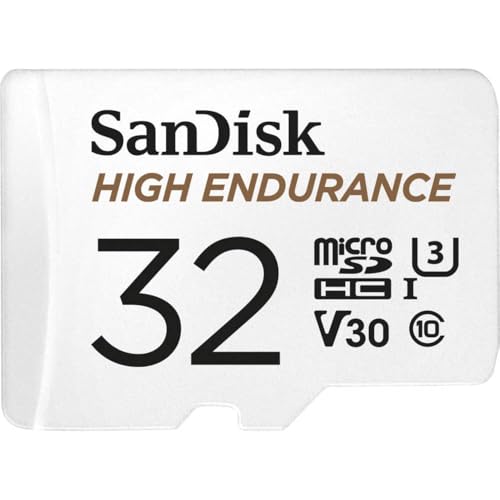 Beginner pickSANDISK 32GB High Endurance Video microSDHC Card with Adapter for dash cam and home...32GB / high endurance$22.99Check price on Amazon
The SANDISK 32GB High Endurance microSD card is rated for dash cam and home monitoring use and costs $22.99. It is a sensible size for a single 1080p front channel, where it holds several hours of footage before looping, and it avoids paying for capacity a smaller setup does not need.
Not for: anyone running a front-and-rear or three-channel 4K setup, where 32GB fills up and loops over in well under an hour.
Intermediate: Best industrial-grade card for a dual-channel 4K setup
Who it is for: someone running a 4K front-and-rear dash cam who wants a card built specifically for that use rather than a general-purpose high-endurance card
 Intermediate pickVIOFO 128GB Industrial Grade High Endurance microSDXC Card for Dash Cam128GB / high endurance$72.99Check price on Amazon
The VIOFO 128GB Industrial Grade High Endurance microSDXC card is built specifically for dash cam use and costs $72.99. VIOFO sells this card as an accessory to its own dash cam lineup, which is a signal that it is validated against sustained high-bitrate recording rather than general-purpose file storage.
Not for: buyers on a tight budget, since the SANDISK 128GB High Endurance card at $36.99 covers the same capacity for close to half the price.
Expert: Best large-capacity card for long buffer windows
Who it is for: a rideshare, delivery, or long-commute driver who wants days of buffer before the loop overwrites old footage, or who runs a three-channel setup with a high combined bitrate
 Expert pickVIOFO 512GB Industrial Grade High Endurance microSD Card for Dash Cam512GB / high endurance$229.99Check price on Amazon
The VIOFO 512GB Industrial Grade High Endurance microSD card holds roughly four times the footage of a 128GB card at the same bitrate, at $229.99. For a three-channel setup or a car that logs many hours a day, that extra capacity buys real peace of mind between checks on the footage.
Not for: casual drivers with a simple front-and-rear setup, where 128GB is already enough buffer for a normal day of driving.
| Model | Price | Key spec | Best for |
|---|---|---|---|
| SANDISK 32GB High Endurance | $22.99 | 32GB, high endurance rating | Single-channel budget setups |
| Gigastone 64GB High Endurance Pro | $34.99 | 64GB, high endurance, 5 years data recovery | Mid-size budget card |
| SANDISK 128GB High Endurance | $36.99 | 128GB, high endurance rating | Overall best value |
| VIOFO 128GB Industrial Grade | $72.99 | 128GB, industrial-grade high endurance | Dash cam specific validation |
| Samsung PRO Endurance 128GB | $76.99 | 128GB, endurance rated, includes adapter | Alternative brand at the same size |
| SANDISK 256GB High Endurance | $69.99 | 256GB, high endurance rating | Longer buffer at a moderate price |
| VIOFO 512GB Industrial Grade | $229.99 | 512GB, industrial-grade high endurance | Longest buffer, three-channel setups |
Why does a dash cam need a special SD card?
A dash cam records in a continuous loop, constantly overwriting the oldest footage with new clips as the card fills up. That workload puts far more write cycles on the card than a phone or a standalone camera, where files are written once and rarely overwritten. Standard consumer microSD cards are not built for that pattern and can wear out, corrupt files, or drop frames under sustained loop recording. High-endurance and industrial-grade cards use flash memory and controllers specifically rated for this continuous overwrite cycle.
What size SD card do I actually need?
Card size needed depends on your dash cam's combined bitrate. A single 1080p front channel runs about 12 Mbps, so a 32GB card holds roughly 6 hours. A 4K front plus 1080p rear setup runs about 42 Mbps combined, so a 128GB card holds roughly 6.3 hours, and a 256GB card holds roughly 12.6 hours. A three-channel 4K setup with a cabin camera runs closer to 50 to 55 Mbps combined, which shortens those numbers somewhat at the same card size.
As a rule of thumb: match card size to how many hours you want between checking the footage, not just to the biggest card you can afford, since a bigger card mainly buys more time before the loop overwrites old clips, not better video quality.
High endurance vs industrial grade, is there a real difference?
Both are built for continuous overwrite workloads and outperform standard consumer cards for dash cam use. Industrial-grade cards, like the VIOFO options here, are typically validated by the dash cam manufacturer itself against its own camera's write patterns, which can matter if you have had reliability issues with a general high-endurance card in a specific camera model. For most drivers, a well-known high-endurance card like the SANDISK options here performs reliably without needing the industrial-grade label.
How we chose
This page was researched from published manufacturer specifications and verified owner reviews on the retail listings, not hands-on testing. We only included cards that state a high-endurance or industrial-grade rating in their own listing, since standard consumer microSD cards are not built for continuous dash cam loop recording even if they are large enough in capacity.
We compared capacity, price per gigabyte, and whether the card is sold as a dash-cam-specific accessory by a camera brand, like VIOFO, versus a general-purpose high-endurance card from a memory card brand, like SanDisk or Samsung.
Buying tips
Does a bigger card mean better video quality?
No. Card size only affects how many hours of footage fit before the loop overwrites old clips. Video quality is set by the dash cam's resolution and bitrate settings, not by the card itself, as long as the card can sustain the required write speed.
Should I reformat a new card before using it?
Yes, format any new card in the dash cam itself rather than on a computer, since dash cams use a specific file system and folder structure for loop recording that a computer format may not set up correctly.
How often should I replace a dash cam SD card?
High-endurance cards are rated for a large number of write cycles, but no card lasts forever under constant loop recording. Watch for recording errors, corrupted files, or the camera reporting a card fault, and replace the card if those issues start appearing regularly.
Can I use the same card size across a front-and-rear and a three-channel setup?
You can, but expect less buffer time on a three-channel setup at the same card size, since the added cabin channel raises the combined bitrate. Step up one capacity tier, for example from 128GB to 256GB, if you are adding a third channel and want similar buffer time to your old setup.
Other options across the price range
An even spread from budget to premium. Prices change often.

 Integral 128GB High Endurance microSD Card for CCTV, Dash Cam & Security Cameras, 4K...128GB / high endurance$38.95Check price on Amazon
 SANDISK 256GB High Endurance microSD Card + Adapter256GB / high endurance$69.99Check price on Amazon
 VIOFO 256GB Industrial Grade High Endurance microSDXC Card for Dash Cam256GB / high endurance$109.99Check price on Amazon
Frequently asked questions
What is the best SD card for a dash cam?
The SANDISK 128GB High Endurance card at $36.99 is the best all-around choice, sized for roughly 6 hours of combined 4K front and 1080p rear footage and rated specifically for continuous loop recording rather than general file storage.
Can I use a regular microSD card in a dash cam?
You can, but a standard consumer card is not built for the constant overwrite cycle of dash cam loop recording and is more likely to wear out, drop frames, or corrupt files over time. A card explicitly rated as high endurance or industrial grade is built for this workload instead.
How many hours of footage fits on a 128GB card?
A 128GB card recording a 4K front camera plus a 1080p rear camera, at a combined bitrate of about 42 Mbps, holds roughly 6.3 hours before the loop starts overwriting the oldest footage. A single 1080p front-only channel at about 12 Mbps holds much longer on the same card size.
Is a 512GB card overkill for a dash cam?
For a simple front-and-rear setup, yes, since 128GB or 256GB already covers a full day or more of driving. A 512GB card, like the VIOFO 512GB Industrial Grade option at $229.99, makes more sense for a three-channel setup or a driver who wants several days of buffer without checking the footage.
Do I need to format a dash cam SD card before first use?
Yes, format the card inside the dash cam itself rather than on a computer, since the camera needs its own file system and loop-recording folder structure to work correctly. Most dash cams have a format option in their settings menu.