Best dash cam hardwire kits
The ROVE Ultimate Dash Cam Hardwire Kit ($29.99) is the best all-around pick, with a USB-C port and 24-hour parking monitoring support at a mid-range price.
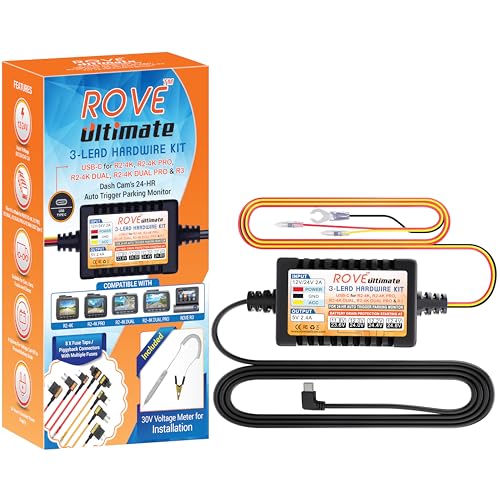
ROVE Ultimate Dash Cam Hardwire Kit, USB-C Port, 24Hr Parking Monitoring
The ROVE Ultimate Dash Cam Hardwire Kit uses a USB-C port and is built for 24-hour parking monitoring, at $29.99. That price sits above the bare-bones fuse-tap kits and below the premium OBD-II cables, while still covering the core job of a hardwire kit: converting the car's always-on power to a safe, regulated voltage for the camera with a low-voltage cutoff to protect the car battery.
The three tiers
Beginner: Best cheap hardwire kit
Who it is for: a driver on a tight budget who just needs a basic fuse-tap hardwire kit with low-voltage protection

The Gebildet Dash Cam Hardwire Kit runs a 10-foot Mini USB cable from a 12 to 24 volt fuse tap down to 5 volts for the camera, with low-voltage protection built in, for $9.99. It covers the basic job of a hardwire kit, powering parking mode safely from the fuse box, without any extra features.
Not for: buyers whose dash cam uses a USB-C port instead of Mini USB, since this kit uses the older connector.
Intermediate: Best OBD2 plug-and-play kit
Who it is for: someone who wants to avoid opening the fuse box and would rather plug into the car's OBD2 port instead

The BNnYY OBD2 to USB-C Power Adapter plugs directly into the car's OBD2 diagnostic port instead of tapping a fuse, and it includes parking mode support and low-voltage protection, for $14.39. An OBD2 kit is a simpler install for anyone uncomfortable working behind the fuse box trim, at the cost of using up the OBD2 port for anything else.
Not for: anyone who also uses the OBD2 port for a separate diagnostic tool or tracker, since only one device can typically occupy that port at a time.
Expert: Best premium hardwire kit
Who it is for: a driver who wants a known dash cam brand's own constant-power cable with a Type-C port

The VIOFO OP100 is an OBD-II constant power cable built with a Type-C USB port, at $59.99, sold directly by VIOFO as an accessory for its own dash cam lineup. Buying the hardwire cable from the same brand as the camera reduces the chance of a compatibility or voltage-cutoff mismatch compared to a generic third-party kit.
Not for: budget shoppers, and for anyone whose dash cam is not a VIOFO model, since brand-specific cables are built around that brand's connector and power requirements.
| Model | Price | Key spec | Best for |
|---|---|---|---|
| Gebildet Mini USB Hardwire Kit | $9.99 | 10ft, 12-24V to 5V, low voltage protection | Cheapest fuse-tap kit |
| Range Tour Mini USB Hardwire Kit | $13.99 | 13ft, 12-24V to 5V | Longer cable at a low price |
| BNnYY OBD2 to USB-C Adapter | $14.39 | OBD2 plug-in, parking mode, low voltage protection | No fuse box access needed |
| DZOMK Multi-Interface Kit | $16.98 | Type-C, Micro USB, Mini USB adapters | One kit for multiple connector types |
| ROVE Ultimate Hardwire Kit | $29.99 | USB-C, 24-hour parking monitoring | Overall best value |
| THINKWARE OBD II Power Cable | $44.99 | OBD2 plug-in, parking surveillance mode | Brand-matched THINKWARE cameras |
| VIOFO OP100 Constant Power Cable | $59.99 | OBD-II, Type-C USB port | Brand-matched VIOFO cameras |
What does a hardwire kit actually do?
A hardwire kit takes the car's always-on power, either through a fuse tap behind the dash or through the OBD2 diagnostic port, and steps it down to the voltage the dash cam needs, typically 5 volts over USB. That gives the camera continuous power for parking mode, unlike the car's factory ignition-switched outlets, which cut off the moment you turn off the engine.
The low-voltage cutoff is the safety feature built into every kit on this page. It monitors the car battery's voltage and disconnects the camera once the battery drops to a preset threshold, commonly somewhere in the 11.6 to 12.4 volt range, before it can drain the battery too far to start the engine.
Fuse tap or OBD2, which is easier to install?
A fuse tap kit, like the Gebildet or Range Tour options here, connects to a specific fuse slot in the car's fuse box, which usually requires removing a trim panel and identifying the correct always-on fuse with a multimeter or test light. An OBD2 kit, like the BNnYY or THINKWARE options here, simply plugs into the OBD2 port, which is faster and needs no trim removal, but it occupies that port and is not always compatible with cars where the OBD2 port switches off with the ignition.
How much power does parking mode actually draw?
A two-channel dash cam in parking mode typically draws about 4 to 5 watts, which works out to roughly 0.4 amps on a 12-volt system. That is a small load relative to a healthy car battery's total capacity, but over many hours parked it adds up, which is exactly why the low-voltage cutoff matters: it stops the drain before the battery gets too low to start the car.
How we chose
This page was researched from published manufacturer specifications and verified owner reviews on the retail listings, not hands-on testing. We compared connector type, installation method, whether a low-voltage cutoff is stated, and price across current hardwire kit listings.
We split picks between fuse-tap and OBD2 style kits since the right choice depends on the car and the installer's comfort level, not just on price, and we noted brand-matched cables separately since they carry less compatibility risk with that brand's own dash cams.
Buying tips
Mini USB, Micro USB, or USB-C?
Check your dash cam's power port before ordering a hardwire kit, since the three connector types are not interchangeable. Some kits, like the DZOMK Multi-Interface Kit, include adapters for more than one connector type if you are not certain or plan to switch cameras later.
Is a low-voltage cutoff adjustable?
Many kits let you set the cutoff voltage, commonly in the 11.6 to 12.4 volt range. A higher cutoff protects the battery more but shortens parking mode runtime; a lower cutoff extends runtime but leaves less margin before the battery might struggle to start the car.
Should I install a fuse tap myself?
If you are comfortable identifying an always-on fuse with a test light and running a cable along interior trim, a fuse tap kit is a reasonable do-it-yourself install. If not, an OBD2 kit or a professional installer are both lower-risk options.
Does a hardwire kit replace a battery pack?
No, they solve the same problem, continuous power for parking mode, in different ways. A hardwire kit draws from the car's own battery; a battery pack uses a separate cell. See the hardwire kit vs battery pack comparison linked below for which fits your situation.
Other options across the price range
An even spread from budget to premium. Prices change often.


Frequently asked questions
What is the best dash cam hardwire kit?
The ROVE Ultimate Dash Cam Hardwire Kit at $29.99 is the best all-around pick, with a USB-C port and 24-hour parking monitoring support. For a cheaper basic option, the Gebildet Mini USB Hardwire Kit at $9.99 covers the same core job with low-voltage protection.
Is an OBD2 hardwire kit as good as a fuse-tap kit?
Both deliver continuous power for parking mode with a low-voltage cutoff. An OBD2 kit, like the BNnYY option at $14.39, is easier to install since it plugs into the diagnostic port, but it occupies that port and depends on the OBD2 port staying powered when the ignition is off, which varies by car.
What voltage does a hardwire kit cut off at?
Commonly somewhere between 11.6 and 12.4 volts, and several kits let you choose the exact threshold. This cutoff is what protects the car's starting battery from being drained too far by the dash cam's parking mode power draw.
How much power does a hardwired dash cam draw while parked?
A typical two-channel dash cam in parking mode draws roughly 4 to 5 watts, or about 0.4 amps on a 12-volt system. That is a modest draw relative to a healthy battery's capacity, which is why hardwire kits can safely run parking mode for many hours before the low-voltage cutoff engages.
Should I buy a hardwire kit from the same brand as my dash cam?
It is not required, since most kits use standard USB connectors and voltage ranges, but a brand-matched cable like the VIOFO OP100 or THINKWARE OBD II Power Cable removes any guesswork about connector fit or cutoff behavior with that specific camera.