How dash cam parking mode works
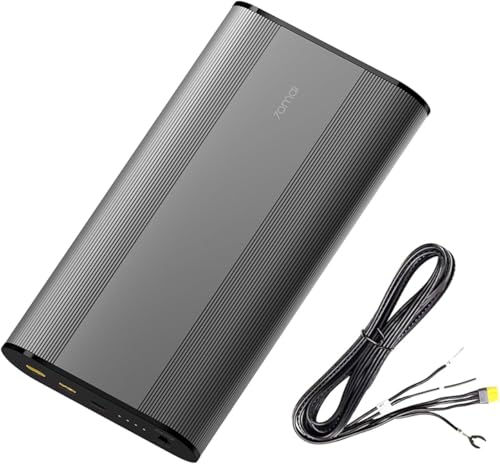
Parking mode keeps a dash cam recording or watching for motion and impact after you lock the car, powered either by a hardwire kit tapping the fuse box or a standalone battery pack like the 70mai BL96NNX, which the maker lists at up to 30 hours on its 96Wh LiFePO4 cell for $219.99.

The main piece of gear for this job. The rest of what you need is below.
What is parking mode and how does it differ from normal recording?
While you are driving, a dash cam records continuously and overwrites the oldest loop footage as the card fills. Parking mode is a separate power state the camera enters once the ignition is off. Instead of recording nonstop, most cams switch to one of three modes: motion detection, which records only when the sensor sees movement in frame; impact detection, which records only when the built-in G-sensor feels a bump; or continuous low-frame-rate recording that keeps rolling the whole time the car is parked.
Which modes a cam offers, and how well its parking mode actually works, depends on the model. Something like the Nextbase 320XR at $159.99 or the THINKWARE U3000 4K Dash Cam Front and Rear at $426.29 both list parking mode as a feature, but check each cam's own spec sheet for which detection types it supports before you buy a power source to match.
What powers a dash cam in parking mode?
There are two ways to give a dash cam power once the engine is off: hardwiring into the car's fuse box, or adding a standalone battery pack that connects between the cam and its usual cable.
A hardwire kit is the cheaper route since it draws from the car's own starter battery, but it has to include a low voltage cutoff so it does not leave you with a dead battery. A battery pack, like the REDTIGER Dash Cam Backup Power at $99.00 or the TXL 128Wh LiFePO4 pack at $159.99, carries its own charge and never touches the car's battery at all, which is the safer option if you park for days at a time.
How long can parking mode run before the power runs out?
A two-channel dash cam recording continuously in parking mode draws roughly 4 to 5 watts, which works out to about 0.4 amp pulled from a 12V system. On a hardwire kit with no separate battery, that draw comes straight from the car's starter battery, so runtime is really a function of how much charge you are willing to spend before the low voltage cutoff kicks in.
A standalone pack sidesteps that math because it has a known capacity. The 70mai BL96NNX's 96Wh cell is listed by the maker at up to 30 hours, and the larger TXL 128Wh pack should run longer at the same 4 to 5 watt draw, though actual runtime depends on temperature and which detection mode the cam is using.
Motion detection vs continuous recording: which uses less power?
Most dash cams let you choose which parking mode to run in the settings menu, and the choice is really a tradeoff between battery life and how much you want captured.
- Continuous parking mode: records the whole time, uses the most power, captures everything including a slow break-in
- Motion detection: only starts recording when the frame changes, uses less power, can miss a very still act like someone keying a door panel
- Impact and G-sensor detection: only records on a bump, uses the least power, will miss non-contact events like a break-in attempt
Hardwire kit or battery pack: how do I decide?
A hardwire kit, such as the PRUVEEO Smart Acc Hardwire Kit at $15.99, is the lower cost option and works well if the car is driven every day or two, since the battery gets recharged by the alternator before the cutoff becomes a concern.
A battery pack makes more sense for a car that sits for days at a stretch, like a second vehicle or a work truck parked at a job site, since it never risks the starter battery at all. Some owners run both: a hardwire kit for daily driving and a pack for longer stretches parked.
What you need for parking mode
Prices change often.


Frequently asked questions
Does parking mode drain my car's battery?
It can, if you rely on a hardwire kit and the car sits for a long stretch without being driven. A properly wired kit has a low voltage cutoff, commonly set between 11.6V and 12.4V, that shuts the camera off before the battery gets too low to start the car. A standalone battery pack avoids this risk entirely since it never draws from the car's battery.
Do all dash cams support parking mode?
No. Parking mode has to be built into the camera's firmware and it needs either a hardwire kit or a battery pack feeding it power once the ignition is off; a cam running only off the cigarette lighter socket loses power the moment the car turns off. Check the specific model's listing for a parking mode feature before assuming it works.
How long will a dash cam battery pack actually last?
That depends on the pack's capacity in watt-hours and which parking mode the cam runs. At a typical 4 to 5 watt draw for continuous recording, a 96Wh pack works out to roughly 19 to 24 hours in theory, though 70mai lists closer to 30 hours for its BL96NNX, likely assuming a lower power detection mode rather than continuous recording.
Can I add parking mode to a dash cam that did not come with a hardwire kit?
Usually yes, as long as the cam has a parking mode setting in its menu and its power port matches a hardwire kit's output connector, whether USB-C, Micro USB, or Mini USB. Check the cam's own specs for parking mode support first, since the hardwire kit only supplies power; the recording logic still has to be in the camera.
Is a hardwire kit or a battery pack better for a car that sits for a week?
A battery pack is the safer choice for a car parked that long, since a hardwire kit is still pulling from the starter battery even with a cutoff switch, and a week is enough time for repeated motion-triggered recordings to add up. A pack like the TXL 128Wh unit keeps that load entirely off the car's own battery.
Do I need to reconnect a battery pack every time I park?
No. Most dash cam battery packs, like the 70mai BL96NNX or the BlackboxMyCar PowerCell 8, are designed to be installed once and left in place, either mounted near the cam or tucked into the trunk, with a cable running to the camera. The pack recharges automatically whenever the car is running, so it stays topped off for the next time you park.